Dense Local Porta Potty Routes Beat a Giant Coverage Map
Why refusing far zip codes is a sanitation strategy - tight local routes, weekly hits, and the failure mode of overextending.
· 6 min read
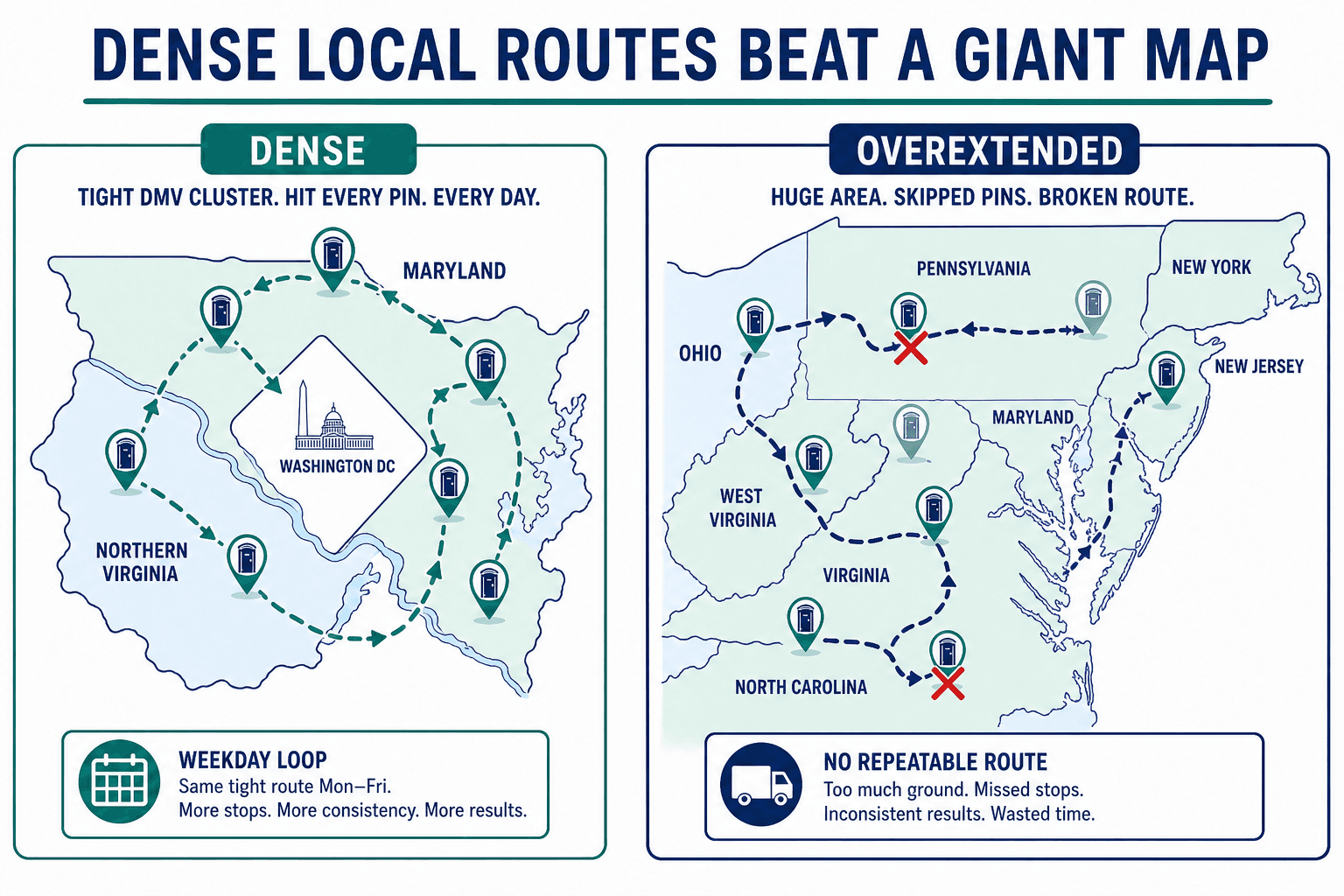
The best sanitation companies say a sentence most marketers hate: we will not overextend outside our service area. Overextending is how you get poor service. Dense local routes are how you get a Tuesday pump-out in January.
What density means
- Trucks start near the work, not three metros away
- The same weekday repeats so supers can plan
- Same-day adds are possible because the truck is already in the cluster
What a giant map actually sells
A 100-location coverage claim is a sales asset. It is not a route. When one dispatch queue owns too much geography, skipped service gets marked complete, wedding jobs get cancelled as out-of-area after payment, and pickup never happens. That pattern is national. You do not need it in Montgomery County.
Our version
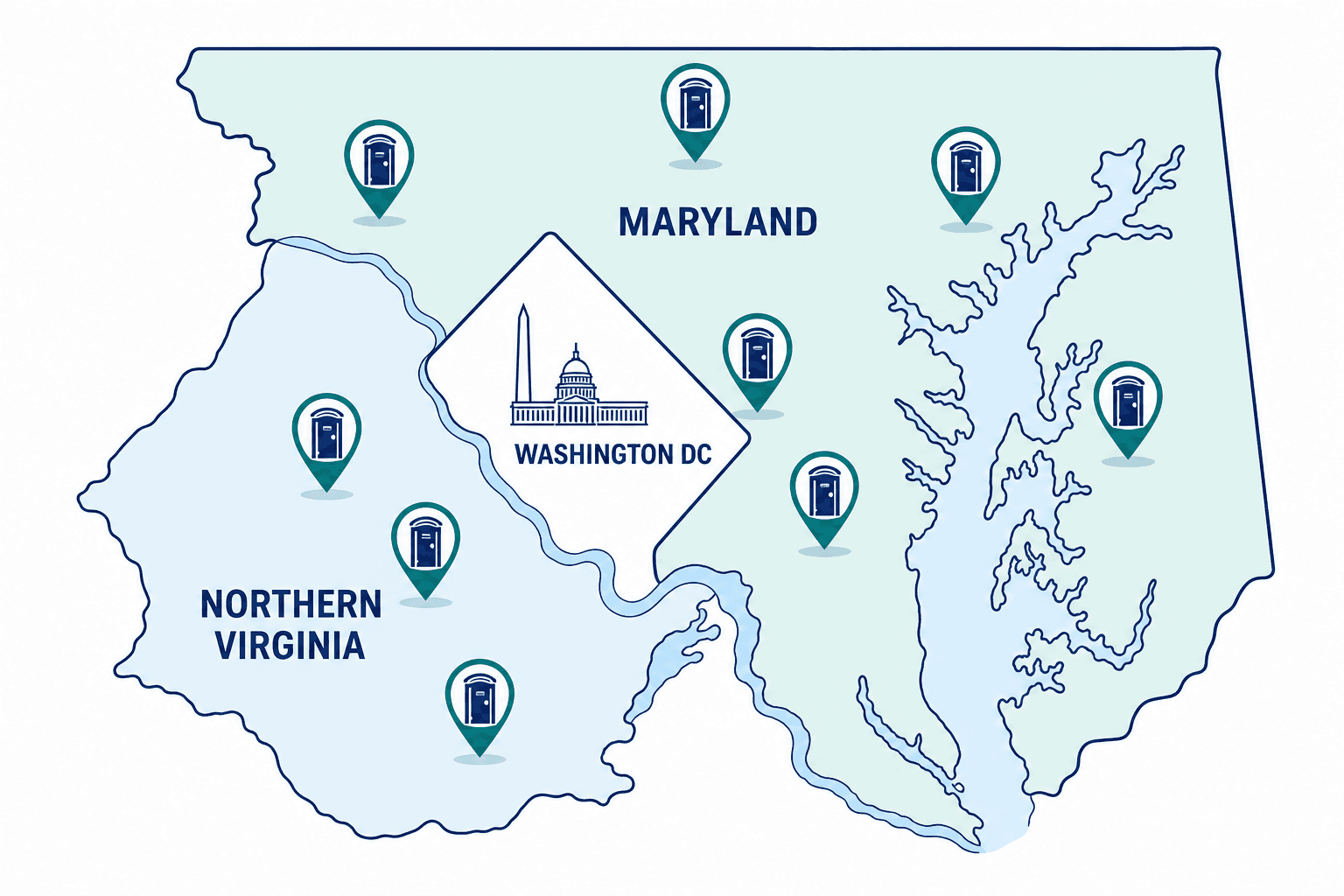
Big Porta Potties is building the boring version: Prince George's County, Washington DC, and Montgomery County routes that actually close. If we cannot hold the weekday, we will not take the deposit. Call (202) 365-1682 and ask whether your address is in the cluster.
FAQ
Do you serve every county in Maryland?
We serve Prince George's County, Washington DC, and Montgomery County - a tight core we can hit weekly. If your site is outside that, we will say so. A coverage map that includes every county is how skipped service starts.
Service areas
Need a local quote?
Tell us the city, dates, and site details. We will price clean units with service included.
Request a quote