Porta Potties for Roofing Crews in DC, PG & Montgomery County
How roofing contractors stage a job-site porta potty out of the tear-off fall zone, keep curb hose access past dumpsters, and schedule quick pickups.
· 6 min read
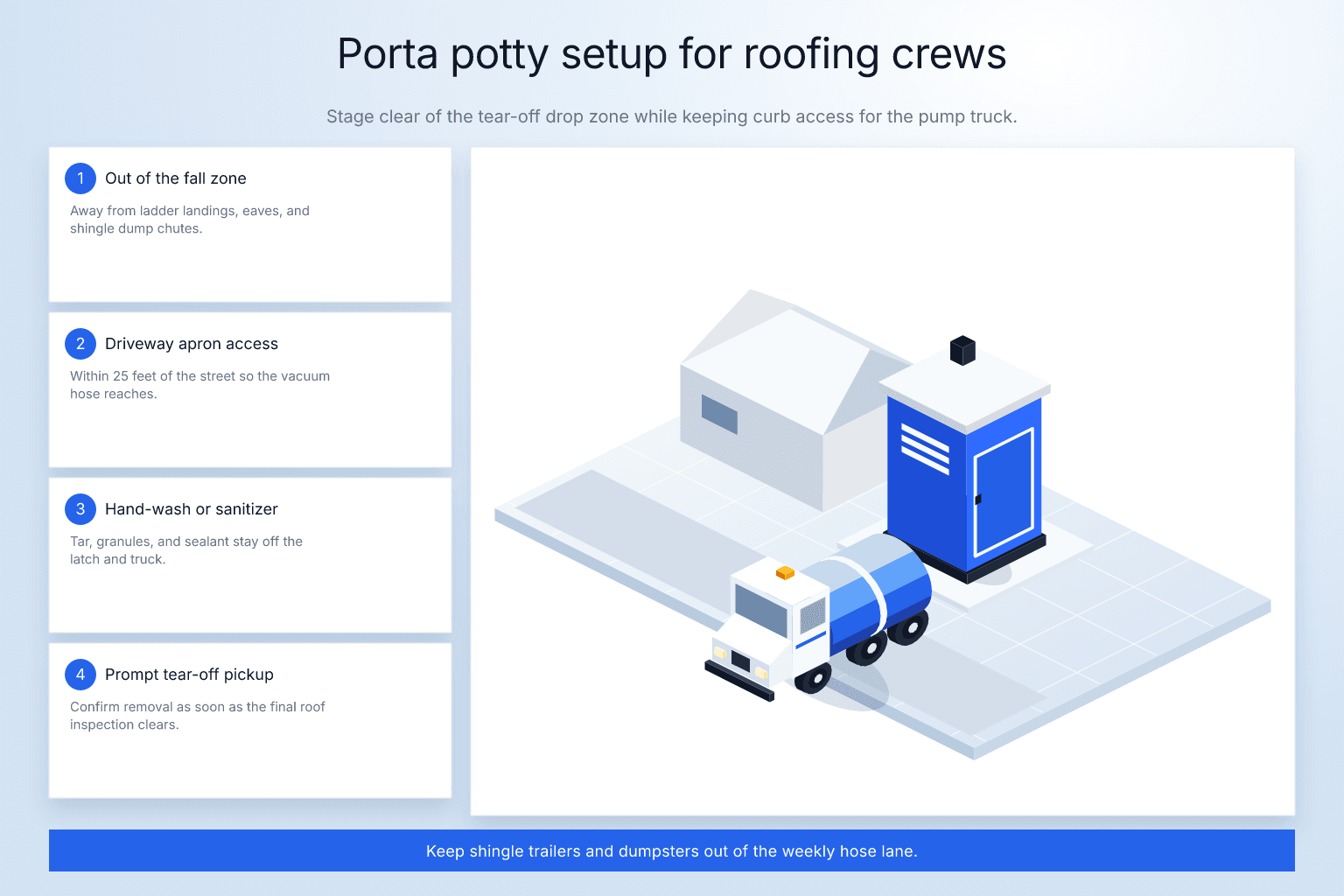
Roofing crews move fast, work over occupied homes or active commercial buildings, and rarely have access to indoor plumbing. Whether it is a three-day residential tear-off in Bethesda or a six-week TPO membrane replacement in Bowie, the portable toilet has to survive shingle trailers, tar, and tight driveways without blocking the crew or annoying the property owner.
Keep the unit out of the tear-off fall zone
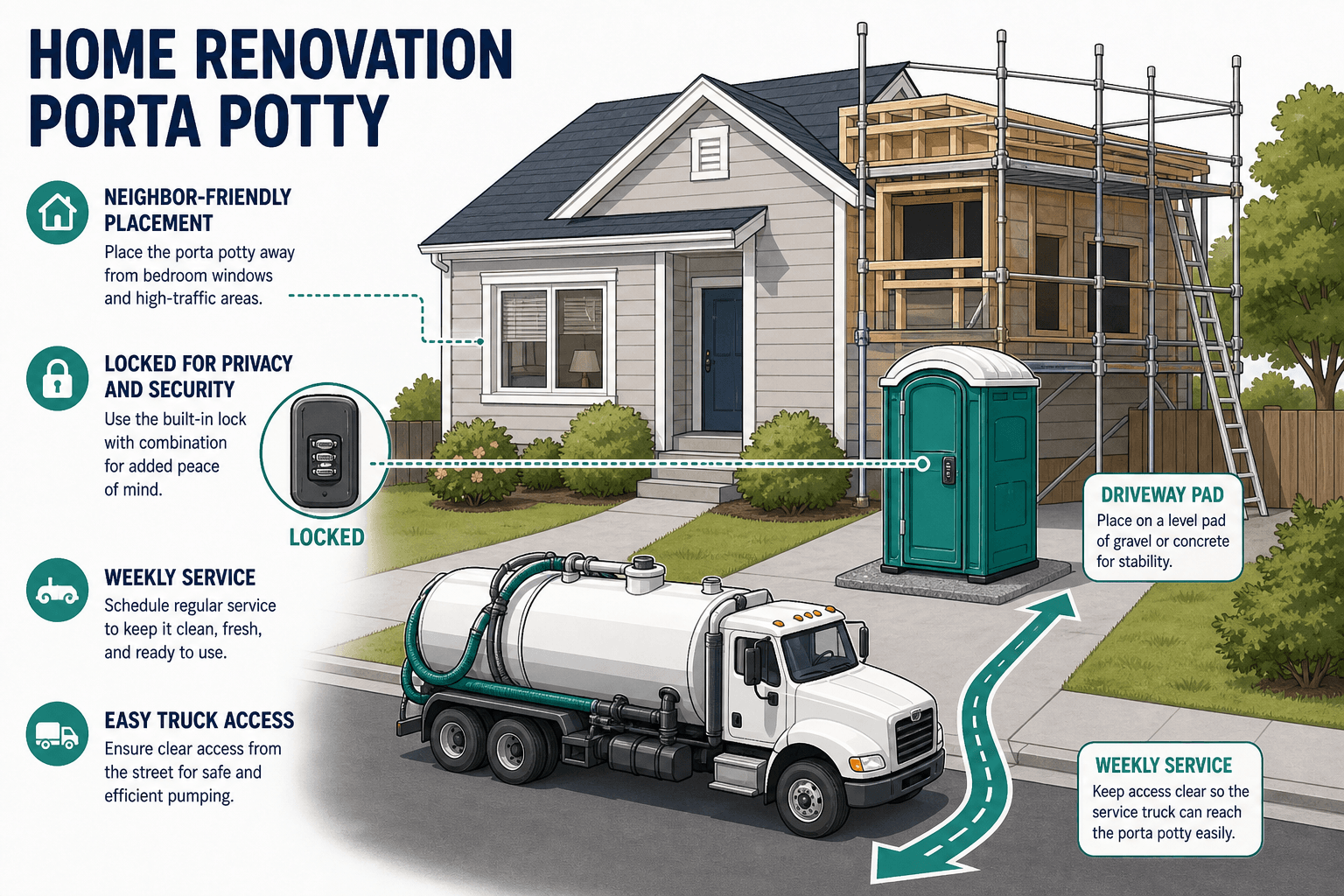
The worst place for a roofer’s toilet is tucked against the house wall under an eave. Tear-off bundles, stray nails, and gutter sections drop fast, and a punctured polyethylene roof cap ruins ventilation immediately.
- Stage near the curb end of the driveway or side pad, outside the perimeter caution tape
- Leave a clear lane past the 20-yard or 30-yard shingle dumpster so the Tuesday pump truck is never boxed in
- Set the skid on flat asphalt or plywood rather than soft turf where outriggers and trailers rut the lawn
Tar, granules, and handwashing at the ladder base
Roofing mastic, flashing cement, and asphalt granules transfer onto door latches and truck steering wheels within an hour if crews have nothing at the pad. Pair commercial roofing stops with a foot-pump hand-wash station on the exit path and stock heavy-duty towels so crews clean up before lunch.
Lock in the pickup date before the shingle trailer pulls out
Homeowners forgive a portable toilet while ladders are up; they call the roofer at 8am the day after final inspection if the blue cabin is still sitting by the mailbox. Put the target removal date on the initial order and text dispatch as soon as the ridge cap goes on so pickup happens on schedule.