Where to Place a Porta Potty on a Job Site
Job-site porta potty placement guide: 25-foot vacuum truck hose reach, level 4×4 ft pads, OSHA prompt-access distance, and ADA approach paths.
· 6 min read
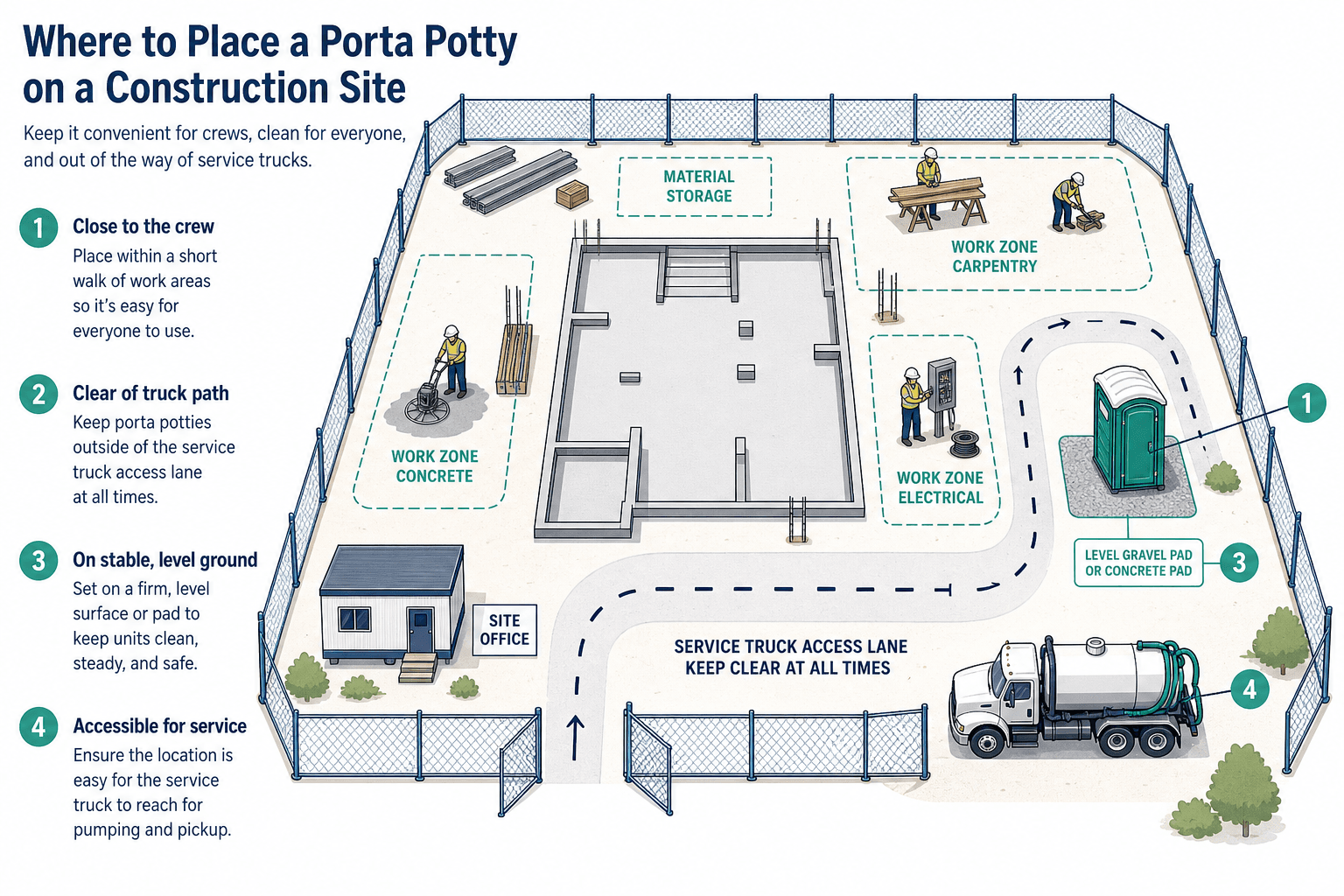
Bad placement is why clean units still generate complaints. If the walk is too far, crews avoid it. If the vacuum hose cannot reach the pad, weekly service gets skipped. If the only ADA porta potty sits behind a gravel berm, the site fails accessibility. Check porta potty dimensions and map the pad before delivery.
Placement rules that keep weekly service on schedule
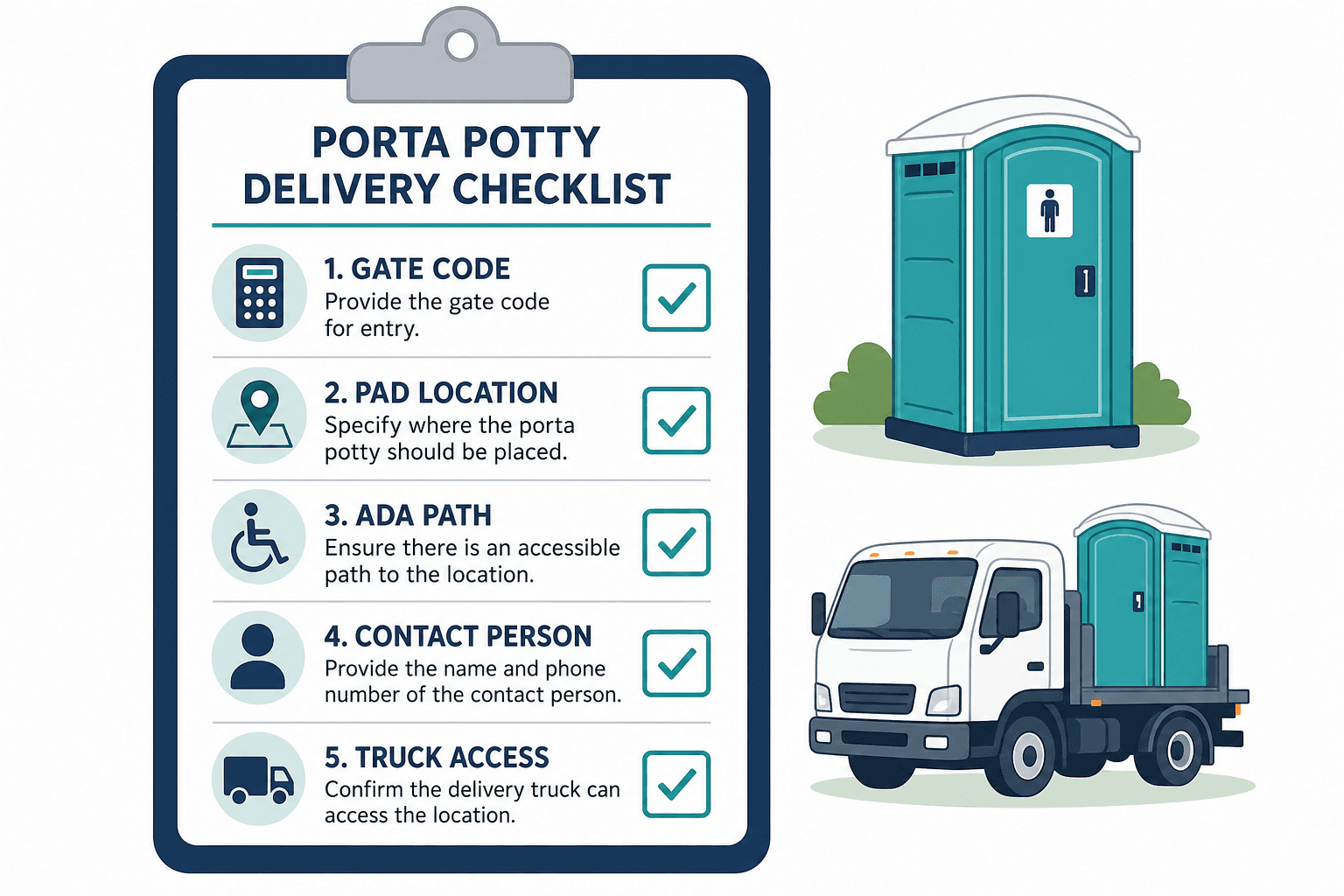
- Stage on level pavement, concrete, or compacted gravel (~4 × 4 ft for a standard unit, ~5 × 8 ft for an ADA unit) with 3 feet of clear door swing
- Place within 25 feet of a legal truck stop so the vacuum hose can reach the tank every week
- Keep within a short walk of the main crew concentration to meet OSHA prompt-access rules
- Stay clear of crane swing radii, material laydown piles, and active excavation edges
- Pair the hand-wash station directly on the exit path of the restroom pad
Common GC staging mistakes
- Tucking units behind a roll-off dumpster where the pump truck is blocked on service day
- Dropping units on uncompacted mud that tilts the door frame or traps a heavy service truck
- Blocking a fire lane, sidewalk, or unpermitted DC curb space (see Washington DC porta potty permit rules)
- Putting a single cluster at the far gate for a multi-building campus instead of splitting pads
- Forgetting to pump and relocate the pad when site fencing or trenching shifts
Frequently Asked Questions
How far can a porta potty be from the service truck and the work area?
Keep the unit within 25 feet of where the vacuum truck parks so the pump hose can reach the holding tank, and close enough to active work zones that crews have prompt access (generally under a few minutes' walk) without crossing crane picks or haul lanes.